It never felt that Comfort!
Comfort as the condition for frontier release. Phase 02 moves out from the ritual inside the room — to ask how the building exists in the world.
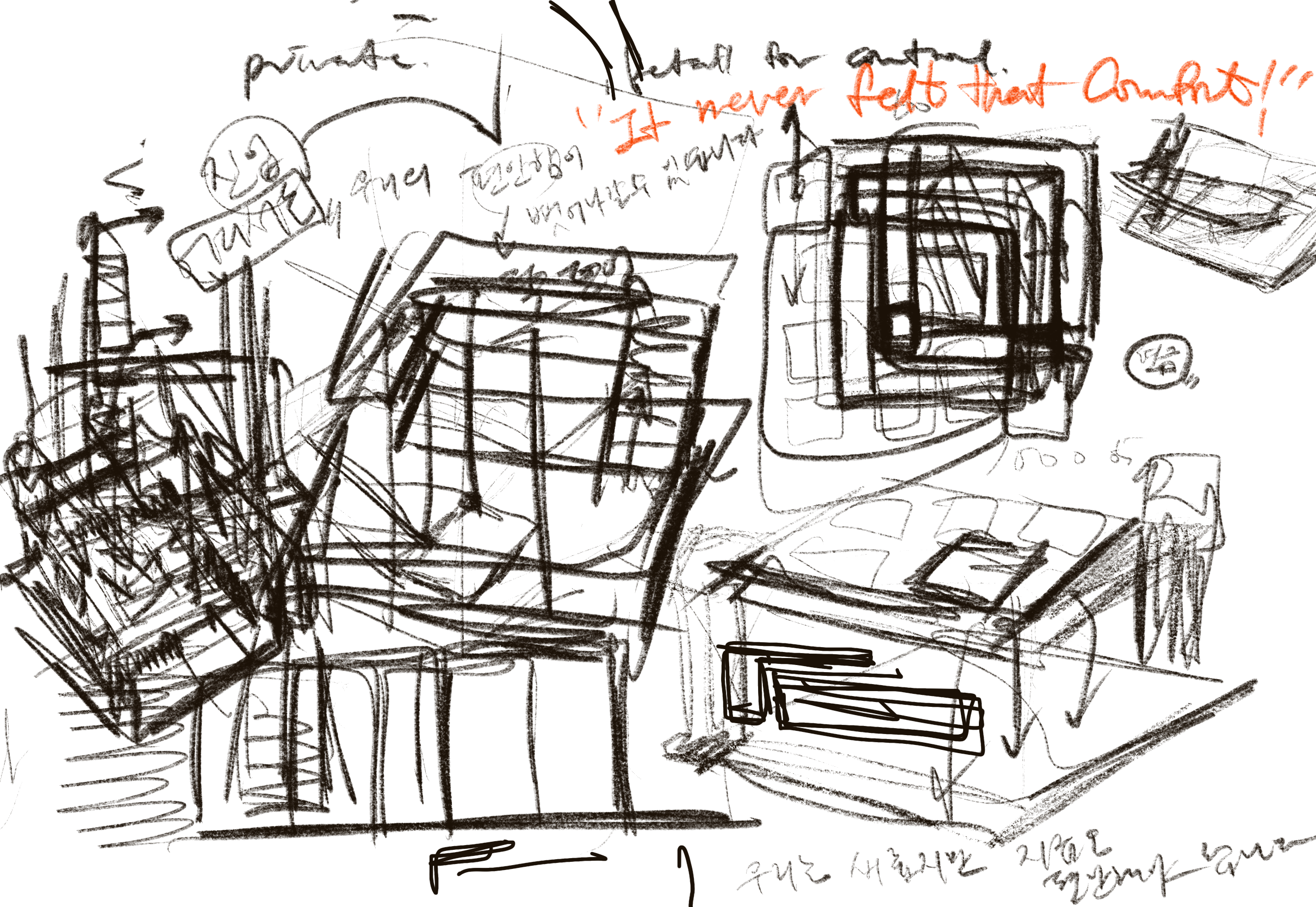
Inside the room, then outside the room.
Phase 01 built the geometry of the ritual — two centers facing across, the asymmetry of speech and light, five offset strata, the diagonal of gaze. That work stays. Phase 02 asks the next question: how does this building exist in the world?
Three answers follow. A narrative reference for how the public meets the building. A typology that scales it across cities. And a paradox — comfort × newness — the architecture must hold without breaking either side.
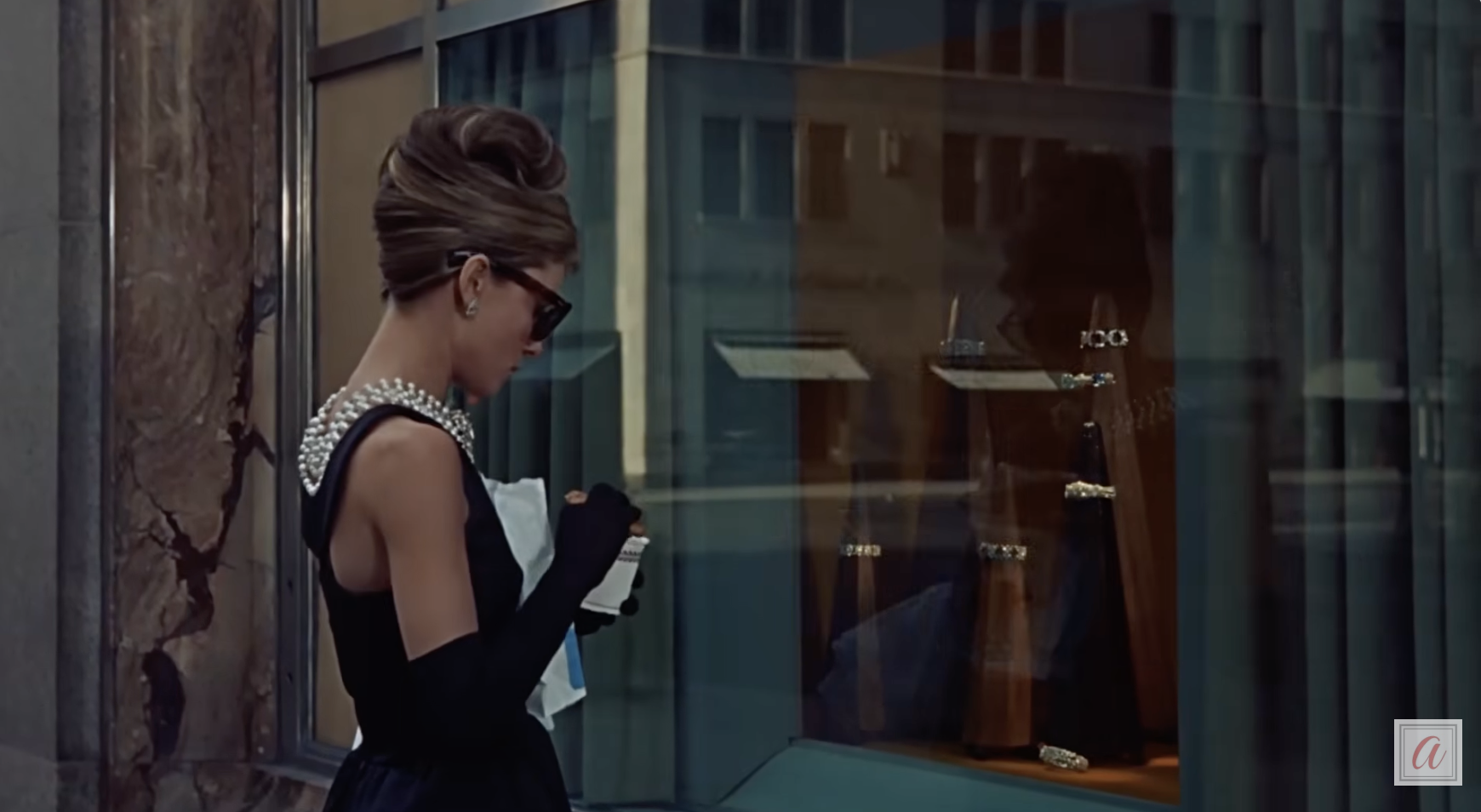
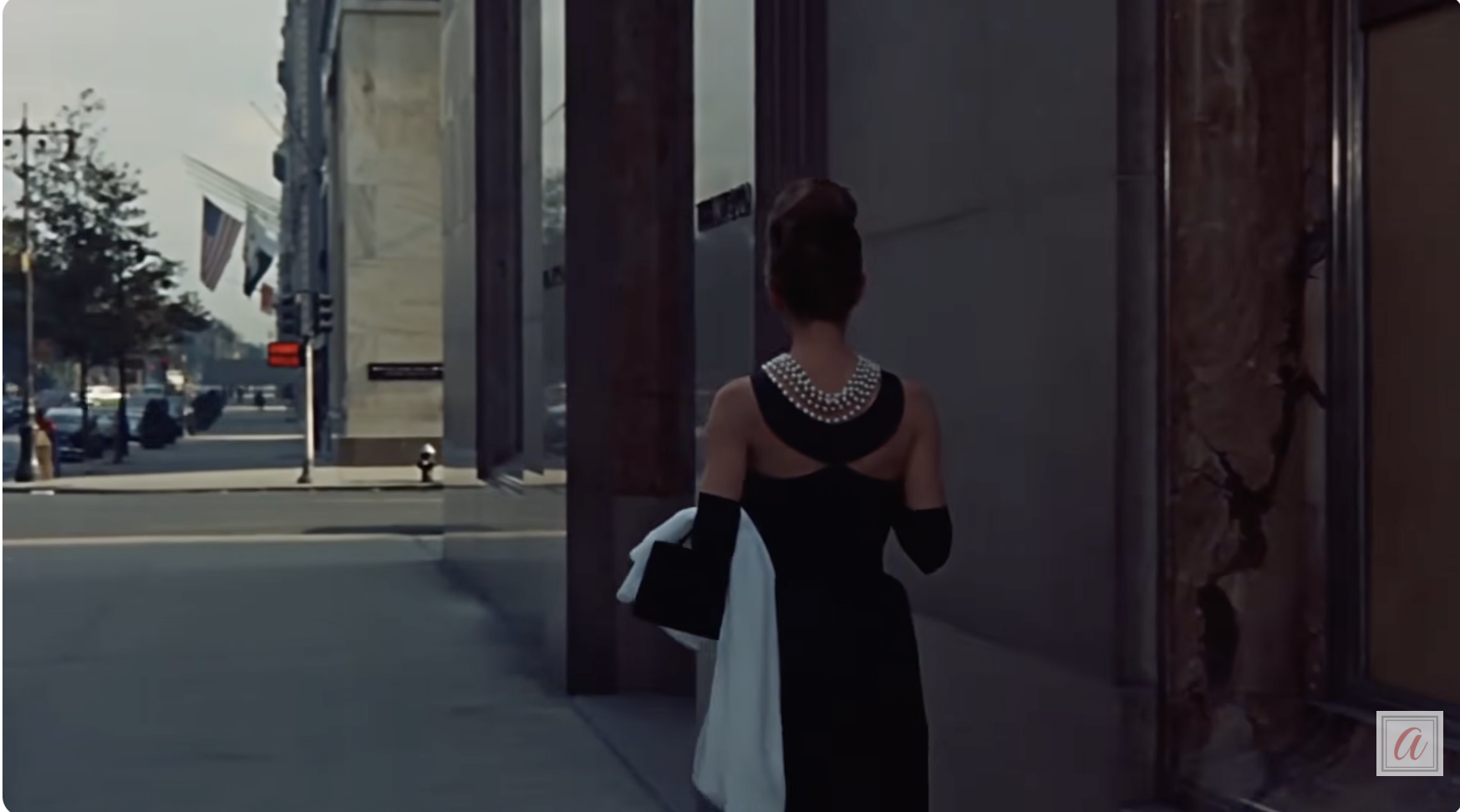
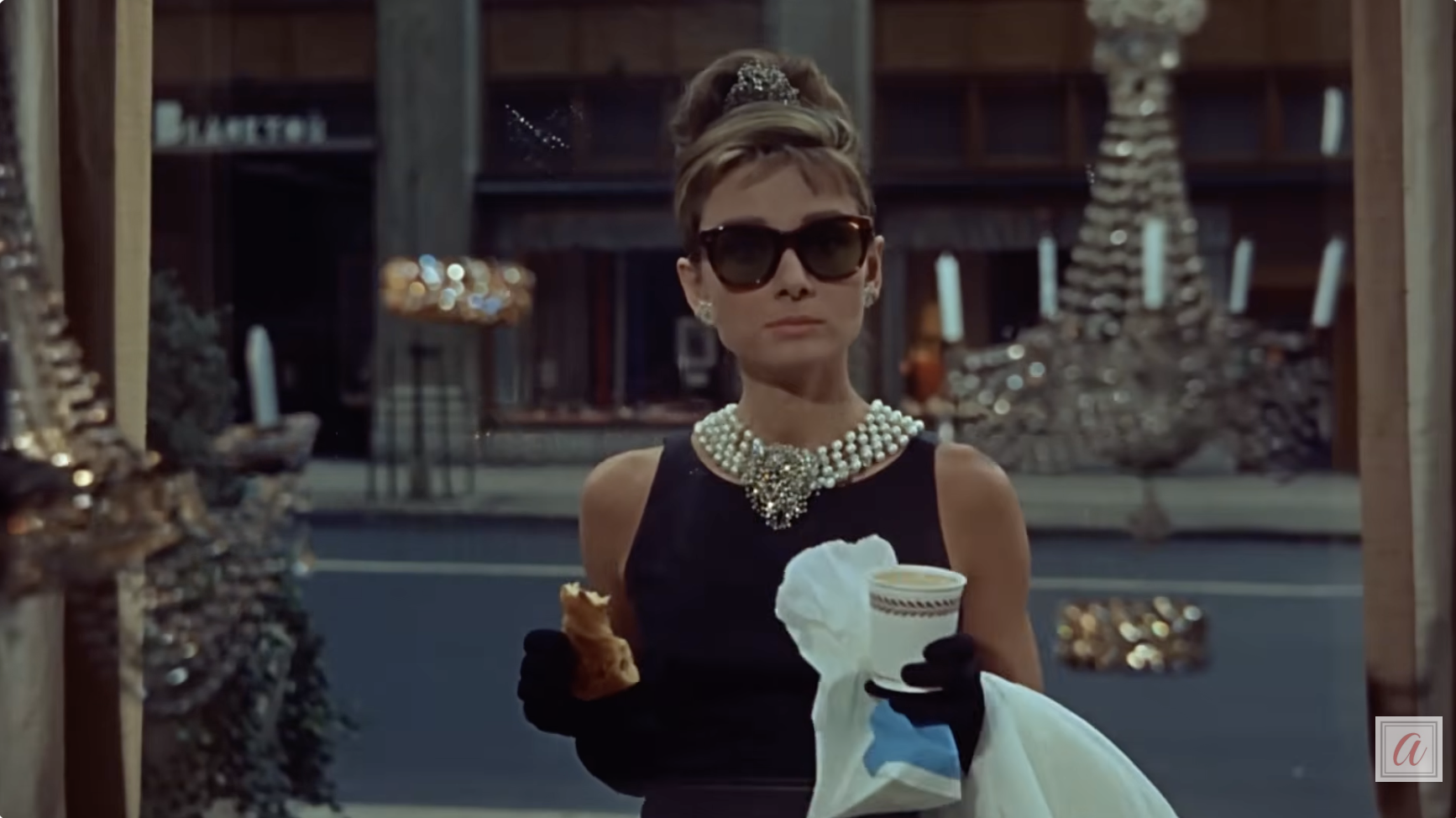
Reverence with ease — the audience’s posture.
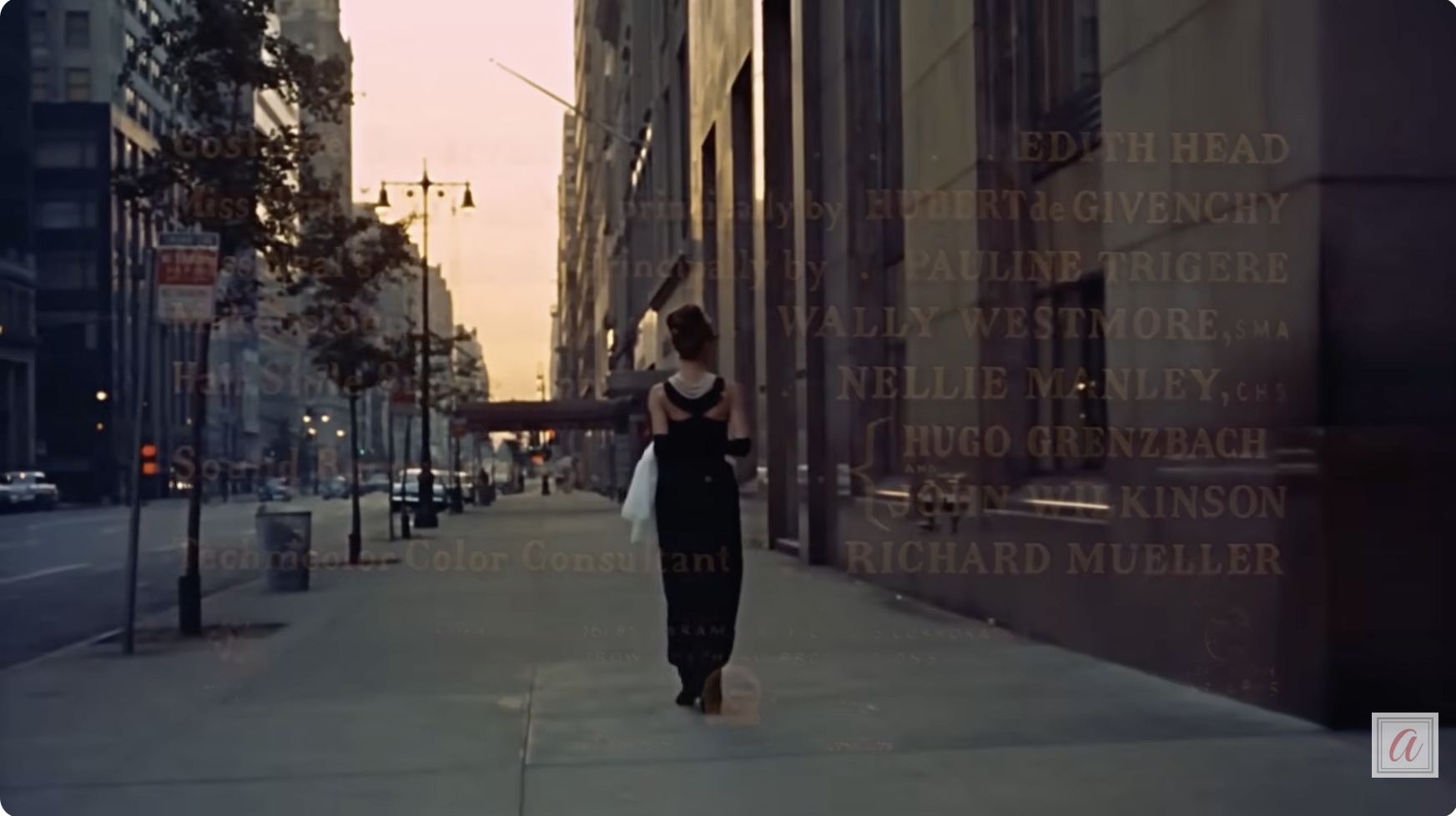
The opening of Breakfast at Tiffany’s. A figure approaches the window, looks in with quiet attention — neither hurried nor intimidated. Magnetic without overwhelming. That is the attitude the public should bring to this building.
The reference solved the ground-floor problem. The first floor is not an entry hall — it is the place of the first gaze. Entry is choreographed: walk along the long facade, look in through the glass, then enter from the side. The room receives you only after you have already seen it.

One form, five cities.
The deLight house is not a single building. It is a standardized form placed in iconic cities — LA, Tokyo, New York, London, Paris — each instance a beacon, all of them together a coordinate system the world can read.
The name finally earns its full meaning here. Not a metaphor for one structure — a network of them, triangulating across continents the way Tiffany flagships triangulate across capitals. Same brand of attention, varying contexts.
Not avant-garde form. Bodies in motion.
The building must hold two values at once. Comfort — so frontier information can land without rejection. Newness — because that is what is being released. If newness is placed in the form (avant-garde silhouette, aggressive material), the rejection it provokes will damage the comfort.
The resolution moves newness from form to movement. The architecture stays calm. Newness is performed by the bodies inside — climbing, descending, traversing — visible from outside through the walking towers. The kinetic facade is the people, not the building.
The building is still. The newness is the people inside it, climbing.
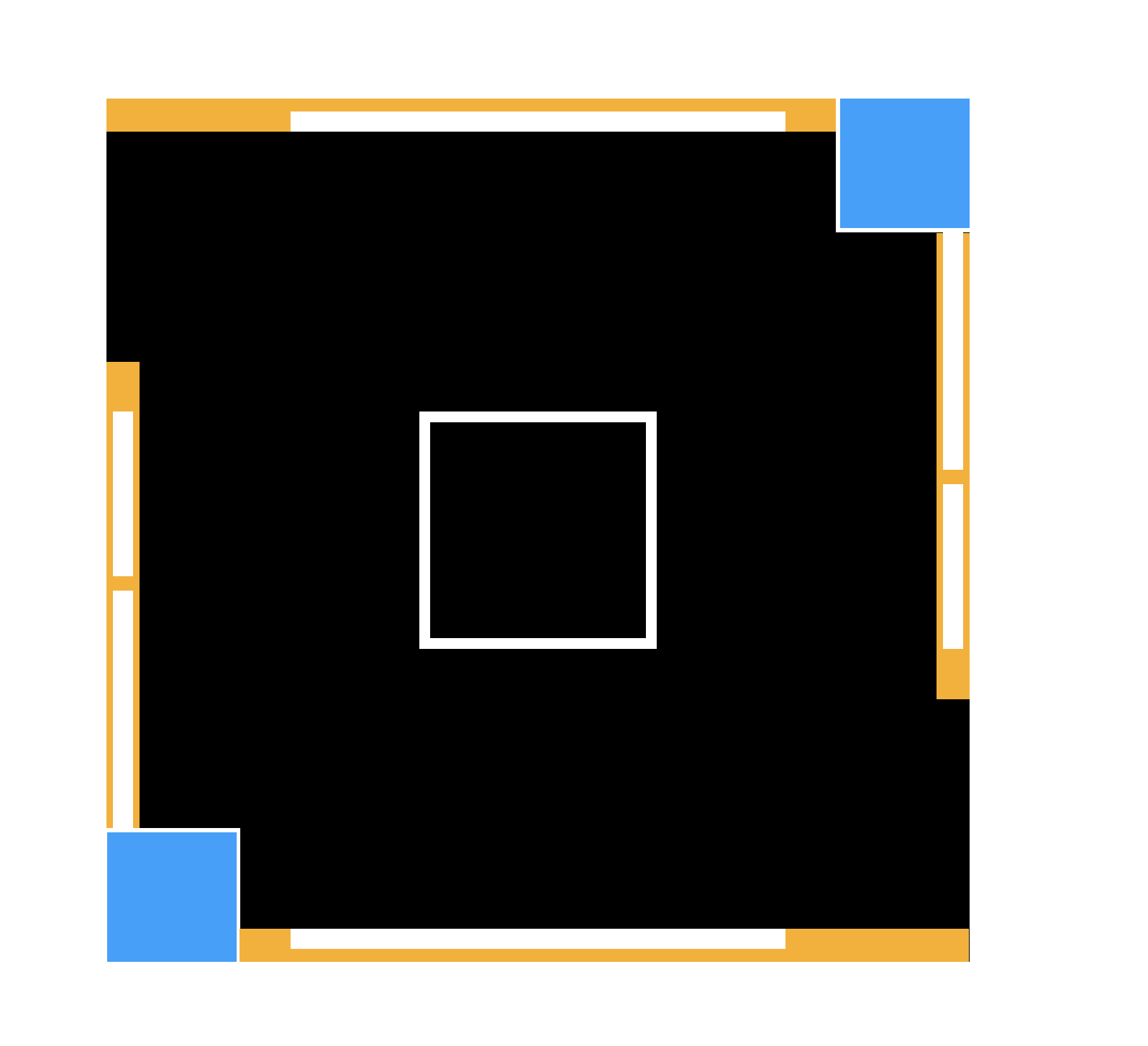
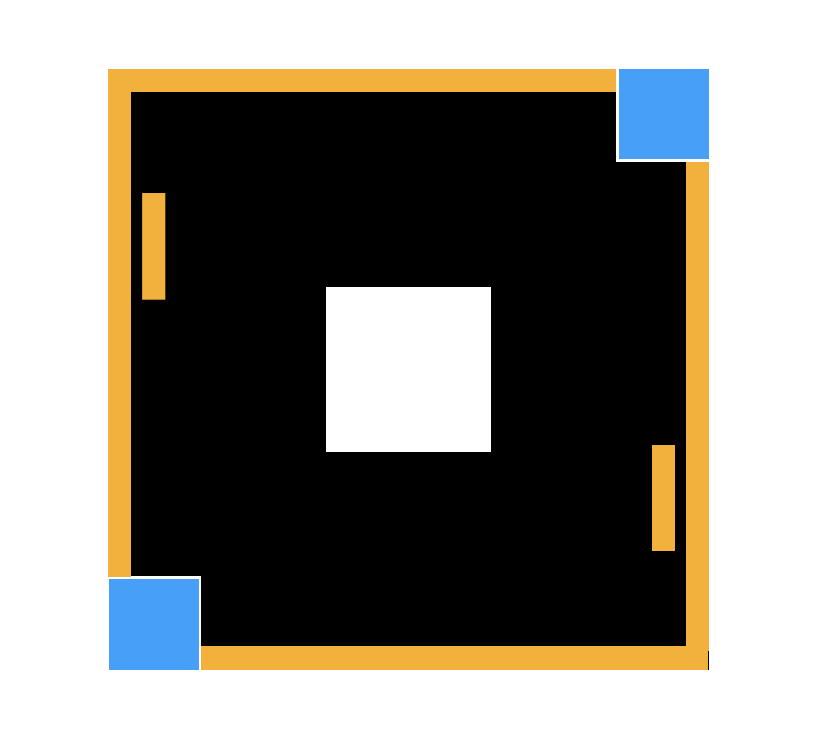
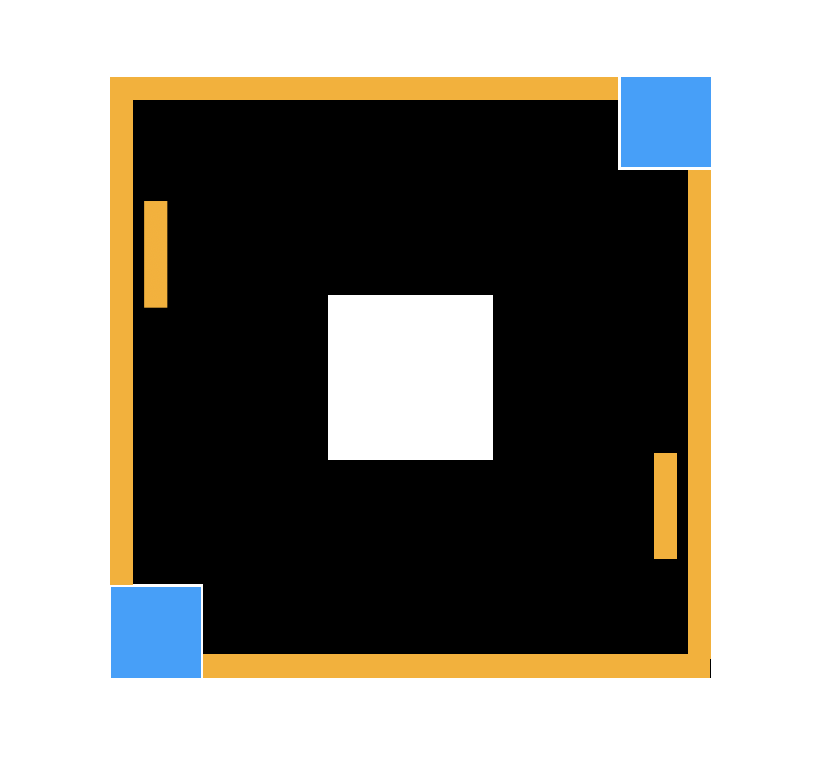
The ground floor opens. The upper floors hold.
Two readings of the same square. The first floor breaks its perimeter — short gaps along each side become entries — so the Tiffany approach can complete itself. The upper floors close the perimeter to a continuous frame, broken only by slit windows on opposite walls. The central void widens as you go up; the higher you stand, the more of the building below is visible to you.
One stair shows. One stair gathers.
At the diagonal corners (always the same two), the walking towers. Externally visible: glass shafts where the people inside become the building’s facade. This is where newness performs itself — the rising and falling silhouettes are the only motion the building offers.
Inside each floor, two more stairs connect upward. Each sits beneath a local vault — a small repetition of the Phase 01 ceiling gesture — that softens the light into a diffuse glow. These stairs are quieter. You take them when you want to walk slowly.
Two systems, not one, give the user a choice — the visible climb, or the soft climb. Variety is the value. The room insists on intensity but refuses to demand it; the building insists on motion but refuses to dictate which kind.
The five panels that gave the plans their shape.
Before the SVGs above, these five panels in Keynote. Yellow for the frame and openings, blue for the corner walking towers, white for the central void. Drawn as fast as the idea could move. The cleaner diagrams above are their restatement.


The same motifs, restated at smaller scales.
Phase 02 is not a new architecture. It is the same grammar continued one level down — into city, into body, into the small repeated gesture above each stair. The motifs of Phase 01 do not disappear; they shrink, multiply, and migrate.
It never felt that Comfort!